

The Novalaxia Compendium™
25th style
Dec. 26, 2025 10:45 PMalternative title: CANNON BALLERS (okay but imagine it said louder)
2025 was a year where I did a lot more than I expected. I am surprised I had the time.
I started to network more.
I made more than one video this year. (technically one-and-a-half)
I have a job now. It sucks. But it sorts out bills.
Being "productive" means that I would have less potential time to actually engage with art and criticism on a meaningful level, or so you would think. However, I had the foresight at the start of the year to note down (most) of what I actually interacted with, though with varying amounts of detail per work. There's still going to be intermittent gaps here and there, predominantly because I am... well, still busy, but I managed to salvage much of what I remember over the twelve months.
Unlike last year and whatever I did then, I will separate everything through distinct categorisation - type of work, chronological order of access.
For clarity, I will denote my original notes in square brackets [like so] to distinguish from additional thoughts I may have writing this piece. I have a lot to say this time. I think.
SEQUENTIAL FRAMES OF ACTION
Akagi: The Genius Who Descended into Darkness [rewatch]
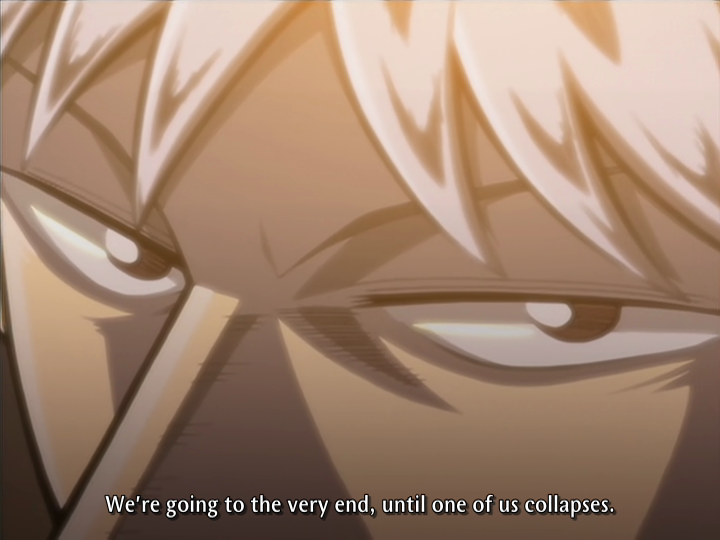
You can never spell "better life" without laying down a bet.
[Coming back to this show after a little bit of mahjong knowledge has exemplified how crazy Shigeru Akagi is as a person, but also having improved at competitive games as a whole since my last viewing reinforces how you really can’t keep up with somebody who cannot comprehend the idea that there are legitimate consequences to taking risks. I think watching Akagi as I am now makes me reflect on my own mentality as a player, realising that the safest or only choices aren’t always the best ones to make. Recommended viewing over reading Road of the King.]
Akagi is a work that I think is only possible to recommend to the truly insane. There's no supernatural auras, freakish phenomena, or unexplainable events designed to extol the virtues of mahjong beyond a logical extreme. What you see is what you get. And what you get is people with too much to lose choosing to have lost it all.
There's a visceral brutalism to the stakes of this work that one could argue is unrealistic. Why, for one, would you suggest to lay down 100,000 yen per game, money you don't even have, against someone who never backs down? One might argue that such irrationalism, this frustrating propensity to chase limits beyond your reach, is a hallmark of author Nobuyuki Fukumoto's narrative. His glacial pacing, the need to hang on details and blitz past specifics with equal fervor - I dare say that he is one of few that successfully preys upon his audience's expectations. It might be risky to adopt this formula and stick to it for so long, but it masterfully mirrors the human psyche in regards to modern art. We are impatient beings, so when we are forced to wait, we gamble on chance.
Perhaps it would be overzealous to therefore describe Akagi, and Fukumoto's other works, as reflections of human nature. Predisposed to risk, yet rational enough to weigh results. As someone with cursory experience in philosophy, it seems vulgar to approach the human mind from a perspective like gambling... but some would argue the choice to take risks is what makes us free range.
The "Washizu mahjong" arc is widely memed upon for its colossal length relative to the rest of Akagi. It's fucking long, and you really do wonder what the point was at the end of it all when the result is a foregone conclusion in other Fukumoto works. But stick long enough with the whole journey, and it's engrossing. Perhaps Shigeru Akagi is meant to portray the kinds of tension that a modern audience looks for in the real world - a possible freedom from the tedium. Or maybe the increasing danger he willingly subjects himself to is a parallel of everyday life on the edge, knowing that you must find some entertainment when odds are stacked against you.
I find myself caught on every tile, every panel, every frame, all the same.
The Raid: Redemption
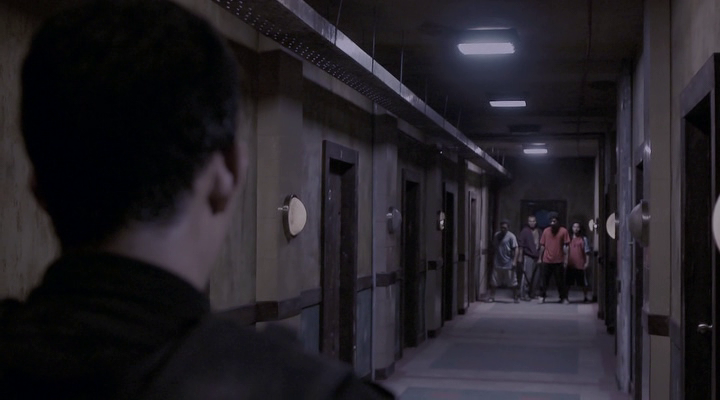
Whoever said you needed a budget for style?
Everyone occasionally needs a good action film to wash down the melodrama of proper cinema. This is that film for me.
It's been a while since I've seen much of anything in the pure action department. Sure, I have a ton of friends that love watching Hong Kong martial arts flicks and the like, but keeping my head down on the grind has locked me out of the loop on such developments. It's sad. Sometimes a brother has to eat, and nobody is feeding.
Sometimes, I'm glad Youtube recommendations come to the rescue.
[I love action films that have something different in mind with how they want to depict the action. The choreography is genuinely fluid beyond belief, which is a rarity I predominantly reserve for very specific tokusatsu shows nowadays. What I tend to mean is that you get a respect for the flexibility of the human body, rather than how we as a species have managed to turn modern combat into a form of theatre. I’m not going to say the line that you probably always hear when people praise fight choreography, but there is a real weight to every impact, scene pan, and camera movement that carries with you in this film. Delectable.]
Much like other films produced on a relatively tight budget, The Raid makes no attempt to sugarcoat its lack of cash. Much of its mise-en-scène and broader cinematography aims for a grounded perspective in what is very much a film built upon wanton violence. You're rarely spared from the barren, poverty-stricken reality of the Indonesian tower block backdrop where all this bloodshed takes place, but you're not being beaten over the head with some ill-fitting aesop as a commentary on wider society either. To some degree, The Raid keeps it real. It doesn't attempt to try anything it's not meaning to do. This is an action film, through and through.
I will agree somewhat with friend of the channel Roger Ebert on his thoughts regarding the film. There's an overpowering sense of mindlessness regarding much of what happens in The Raid. On some level, the amazing choreograhy DOES mask the generic nature behind this corner of cinema. Hell, I would say the sound design personally falls flat. There's a... plastic sense to every impact, with many blows and swings taped at the corners with a dull child lock bluntness that diminishes the physicality. For every good hit, there's a 50/50 chance the accompanying sound is like slapping trout against your kitchen counter. It demolishes the immersion; an offputting reminder of Ebert's purported dislike for genericism.
But there's hardly any harm with a fun fight flick now and again.
The Castle of Cagliostro

The film that you'd think spawned years of cultural influences. Decades.
For anyone with even a fleeting awareness of modern animation history, it comes as no surprise that I would one day have to share audience with such a cinematic titan.
The Castle of Cagliostro is well-known among oldhead and anime historian circles alike as one of the field's crown jewels. Directed by one Hayao Miyazaki, this was to be his very first director's credit in feature film, establishing a legacy still widely felt among critics and culture chronologists to this very day. It's been placed in esteem far beyond average "kinography" by many figures I may be six degrees of separation from, but that won't stop me from watching it myself to form an objective view.
So does it live up to the acclaim?
I find that modern audiences are typically ill-equipped to weigh the impact of the silver screen. Despite a delegation to history and authority, I wager that such elements alone are insufficient to understand just why this film is respected. Every key frame is animated and detailed with such fine strokes, sparing no expense to a picturesque photorealism that engrosses you in the otherwise fictional country of Cagliostro. The attached image may not actually do this justice, but you will soon understand what I mean when you watch the film and let my words sit for a day or two. Every environment sticks with you in a way I haven't quite forgotten yet, while movements are crisp beyond what convention would establish of the 1970s. The sound design is equally cromulent, perfectly matching the melodrama of the moment. Sure, sometimes you're reminded it's a cartoon, but the music and sound effects elevate the overall quality to a level one might not expect from a 70s film.
Though I haven't dared make headway with wider Lupin media (owing in part to my self-proclaimed cowardice for long-running television), this film was perfect as a standalone work. It will suffice if you are simply familiar with the concept of Arsène Lupin III and his ensemble cast of merry maniacs. Watching this with a friend, we both got a good sense for the character, even in spite of Miyazaki's editorial adaptations. A criminal need not necessarily be rude, to be ruthless - or so the saying goes. The cast flows with streaming charisma, smoothing together what some dare call an initially contrived plot. You see two sides of Lupin's coin with Clarisse and Fujiko here, the ladies' man and the conniver, but you never feel a sense of dissonance from what Lupin tends to be in other depictions, something I must give Miyazaki credit for here (but do not mistake this for undue praise.)
A good film is one that both withstands the test of time, yet drags time into another era. An exceptional film is one that changes time itself. Would I say The Castle of Cagliostro surpasses that metric? You will have to watch it yourself, and establish that judgement. I regard it as a timeless classic worthy of praise; I am not one to leave you content with expression alone. Experience the history with your own eyes.
J'adore kinographie.
BOOKS WITH PICTURES INNIT
Slime Saint
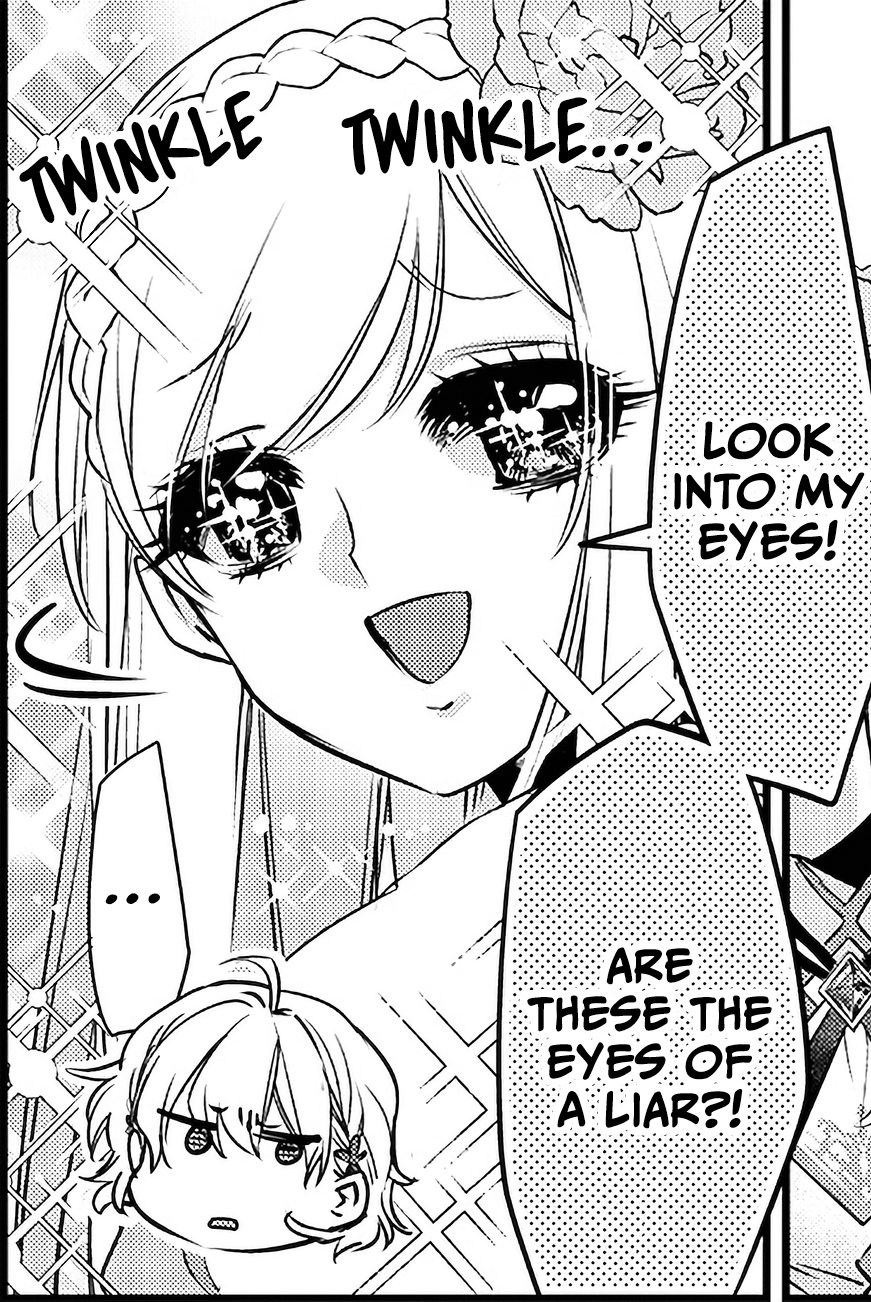
This isn't even the best face that takes up a panel in this one.
Slop hast consumed me whole.
Amidst my boredom at the start of the new year, I decided to stop being lazy and start actively reading manga again. Youtube keeps recommending me those horrid AI manga summaries of manga with nine or so total chapters, of which only six happen to be translated, often times by someone who's so dogshit at proofreading Google Translate that they don't even bother to check whether it sounds like anything a human would say. Lovely. Please stop doing this to me, Alphabet Inc. and ye other algorithm overlords.
Getting back on track, none of the aforementioned is a detraction of Slime Saint. Conversely, this entire manga is a surprising constant of good quality throughout. I'm not going to say that the author is a genius for making a comedy out of villainess reincarnation, but it does keep things fresh enough that it heals (no pun intended) any soul weary of wish-fulfilment feed. Jelly (our nominal protagonist and titular 'slime saint') is equal parts curious and comedic, helped a ton by the plethora of absurd faces she makes as she adapts to her new role in society. The series already stands out on premise alone, but a main character who's a bit dim like this? We're eating tonight, lads.
The art remains clean throughout, but never so pointed as to constantly be serious, even during the moments where the plot steps up a notch. Facial expressions in this manga are easily the highlight, especially with the stark contrast between who Jelly 'was' and 'is' during recollections. For what it's worth, the story is relatively simple, though it's not so much so that you sit through it wondering if anything will actually happen. Some decent stakes keep you interested, even if the end result tends to be 'Jelly learns good deeds get her good eats.' Nothing wrong with that, if you ask me. A comfy bedtime read.
(Side note: I love how Jelly's thoughts are often written with a spindly scrawl in the original Japanese text, which makes more sense as you go along. Great use of different font choices for different occasions here, I wish more manga would take better advantage of that...)
Reincarnated Old Hag can't Leave Things Alone!

this is how I imagine people my age talking about Touhou now
Now this is Lidl-quality slop. Real Aldi-tier shite here.
Going from Slime Saint to this reminds me that life is never always consistent. Mood whiplash should have more refinement than punching reinforced metal plated doors while fully sober. Unfortunately, I am captivated by mid. Satisfying, somewhat well-done mid, in this case. But it is still mid.
"Reincarnated Old Hag can't Leave Things Alone!" is a fairly bog-standard second life fantasy work, albeit with a funny title and okay execution. Lauralis is hardly the most groundbreaking character, regardless of what age she takes, but she IS rendered in nice detail throughout the manga, and is a tad self-aware enough to stop the whole story dragging its feet. The plot is honestly kinda boring at first, but later chapters manage to infuse a little bit of intrigue, so that keeps my interest piqued juuuuuuuust a bit.
Action in this manga does occasionally pop off. Impact in more high-stakes fights lack some of the gravitas you'd expect of a person-sized sword, but when the reincarnated granny pulls off the "Full Body Interlock" (which I'm pretty sure is like a fantasy version of the Tsubame Gaeshi) - that's when shit gets real. The artist also illustrates some nice expressions too, especially when Lauralis goes mask off as she goes for the kill. Developments don't really hit in this manga, but you're at least convinced that it's trying to sell you something before a flashy finisher.
Would I recommend this seriously?
Hell fuckin' no.
Certainly gives me something to gawk at like a freak for an afternoon, though.
Magical Girl Incident
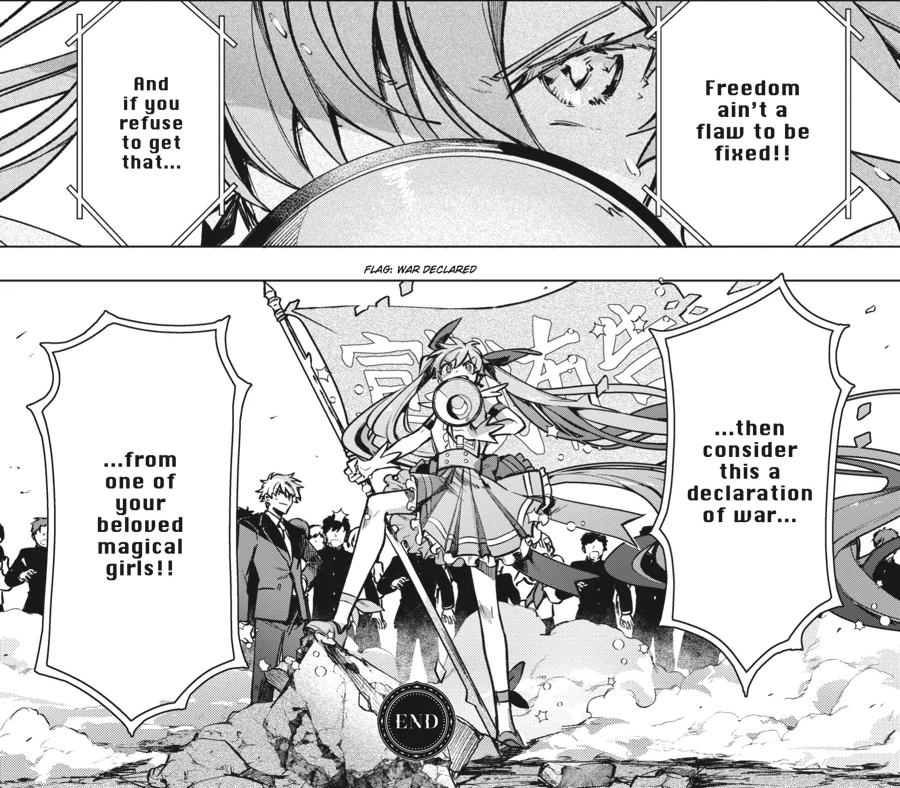
"We have choices. [...] That's what it means to live free."
A main character named Hiromi? Who obtains unimaginable power after laying down his life for the cause of doing good? Damn, two for two on the quality scale.
Magical Girl Incident is one of those works that you may initially dismiss as a parody, and it's hard to blame you there. The cover definitely exudes either "grimdark serious" or "masks a slapstick action manga" vibes that inclines general audiences not to feel too guilty about passing it by in a bookstore. I use this exact framing, knowing full well that I did exactly the same thing. Unfortunately, dear reader, I am attracted to anything with "magical girl" in the title, and this is no exception.
Despite all assumptions pointing to the contrary, this manga was a decent read. I think there's a certain impression people have of "genderbend magical girl" works, but I was pleasantly surprised with how this one went. The main characters (generally) being overworked office folk being power harassed is a bit cheesy for an adult-focused backdrop, but it fits considering the metaphorical monsters of the week are born from stress. Each of the "Waltzes" has a clear on/off gap that makes them unique despite how unremarkable some of the side characters are, while the manga takes a fair balance playing it straight and taking the piss with tropes that stops things getting too stale, though a bit too blatant with the tone shift.
One element of Magical Girl Incident that was executed quite well (in my opinion) was how it approached the everlasting conundrum of "how to rationalise two minds in one body." There's a number of flashbacks in the latter half of the manga involving the main character Hiromi and his friend-plus-other-main-character Yuzuru, where the latter becomes a magical girl after his own near-death experience and lets his "other side" express feelings of appreciation bordering on a love declaration. Some will view this as an allegory of one kind or another, especially when the topic of same-sex marriages in society is directly referenced in the aforementioned moment, but I appreciate the conviction in attempting to tackle the subject without skirting around it (even if HiroYuzu never really becomes a thing, BL or GL. Tch.) It's a twist on the power of love you don't expect to be this upfront, and magical Yuzu is cute about it too. She's great.
The overarching theme of "love and kindness" in Magical Girl Incident is something I tend to be sentimental for. OK, it's a bit cliche to have the MC go through the "failed highschool baseball to hero(ine)" speedrun. But I think we owe each other just a bit of camaraderie through the tough times, a lift up when we're knocked down. This manga nails what I believe to be the core tenet of magical girls - to inspire where we can't help out, even if the glove isn't really ours to hold out. That kind of sincerity to do the right thing, even if the work itself isn't exactly mindblowing - that's why I love magical girls so much. Never judge by premise, but by execution. Actions, not words.
"Everyone has the lead role... in their own life."
Throw Away the Suit Together (Entering An Unknown Summer With You)
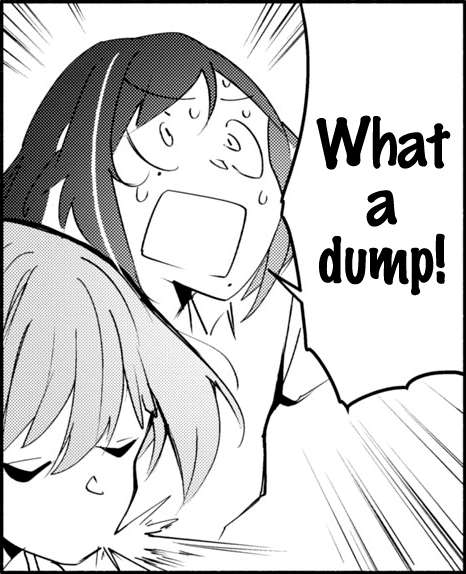
They're talking about a villa, for context. I know what you were thinking.
We all need a work of fiction to remind us of reality's existential dread.
This is the one for me this year.
With the encroaching truth that everything will become computer in due course, I could not have found this manga at a worse point in my life. There is a shocking realism that permeates this work. It haunts me with how close it hits home. I recommended this to a friend a few days prior to writing this segment, on the basis that "this will make [her] cry" - I couldn't stop myself from doing so after I finished reading. I cried a lot!!
One of the pertinent criticisms of Throw Away the Suit Together is that it reads like a humiliation conga. Many were disappointed by the ending crushing Haru and Hinoto under the collective weight of real life. To that, I ask - does an ending have to end on a positive note for a story to be good? Most readers will quickly notice that the relationship between our main characters is optimistic, yet tumultuous. Haru is frequently worn down by constant job rejections, the effects clouding over her not-yet-wife with a VERY prominent shadow. They regularly tell each other everything will be fine, but you can clearly see the frustration, the helplessness, seep through the cracks in real time. Some commentors have argued that the ending effectively retreading the story's start is the result of being axed and forced to wrap up, but I find a kindred solace in that ninety-nine out of one hundred that never pans out. Morbid, but truthfully sobering.
Justifying a bittersweet ending with reasons like the aforementioned doesn't sit right with me. It's the kind of store-brand escapism you can't find at Tesco. We still watch these two adults, naïve as they are, end this tale with learned experiences. You may feel jaded, watching this story end how it does. Keyyang, the author, certainly shows their displeasure through this ending. How I view this conclusion is more than that - we instead watch another story unfold, carrying over prior tribulations learned through weeks, maybe months, of constant hardship. Irrespective of intention, I believe Keyyang has ironically crafted something beautiful from modern tragedy. Love is messy, no matter who's involved. You won't always achieve a goal that keeps you afloat. Opportunities come and go. Even so... don't you find that ephemerality admirable?
Haru and Hii-chan live life on the edge. Shit's rocky. Unfathomable dread lurks for them just as it does for us - bills, job hunting, stability, future prospects... all that stuff. But they never lose sight of their love for each other, difficult as everything seems to disappear. I admire love that labours. This work showed me that.
Never look back, even if you give up. Let's keep ourselves going, together.
Even the Introverted Gals Wanna Get Out There! [catchup]
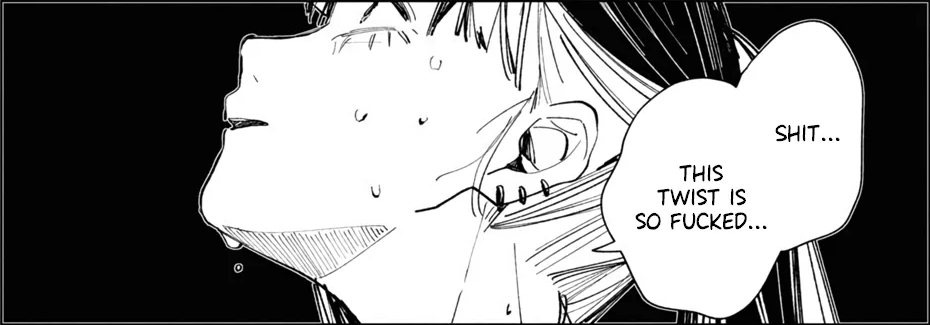
Not reflective of the whole manga. I just like this panel.
[I think these girls need to marry on-screen. I want nothing less than that for them. The true oji-san wish fulfilment is watching two goofy-ahh relatable teens just fucking society up in their own way. Hell yes.]
Every now and then, we have that one work that gets like 2-3 updates a year that we keep an eye on so we can binge through it again. This is (one of) mine for the year of twenty x2 five. And it's good shit.
Ichiko and Kuran have that "two randoms" dynamic that I fuck with a lot. The former is an audience surrogate for the otaku/subculture groups the duo encounters as they go about school life, and the latter is that one dude at work who don't really give a shit but knows enough about the topic to explain it anyway. There is something so nonchalant about the relationship these two share that you cannot find yourself interjecting at all. And other characters try that! Several times! It fails, though. Because girls' love between introverts is like the Hadrian Wall. History will venerate them. Do you understand? Relatability is yuri too.
Kuran is a character I see parts of myself in. She walks on her sidewalk, times to her own signature. Conversely, she is remarkably attentive. Her eye for detail is keen, and she offers profound insight on social matters of all conventions in a dry manner. As the audience, we are meant to laugh at her pointed remarks on baffling contemporary dynamics, relating to that kind of blunt criticism in a "yeah, you fuckin' go, dawg" way. However, I find Kuran, and by extension, author Kashiwagi Tsukiko, as figures who understand subculture. Not relate to it, or live through it with vicarious enthusiasm. They are equal parts critical, and cultured, with how they perceive the arts. It's played for laughs in chapter 3, but you breathe that sentiment through the pages in every facet of this manga, even viewed through the lens of "gyaru just having fun." How we engage with the arts, disciplines, and ways of life around us, is what I believe to be a truly enriching element. Others may find this manga as a quirky counter-discussion on modern engagement with the niche, but I take away more from this than I expect, that gives me prolonged pause for powerful pondering.
It's good to live life free, don't you think?
A Yuri Story About a Girl Who Insists "It's Impossible for Two Girls to Get Together" Completely Falling Within 100 Days
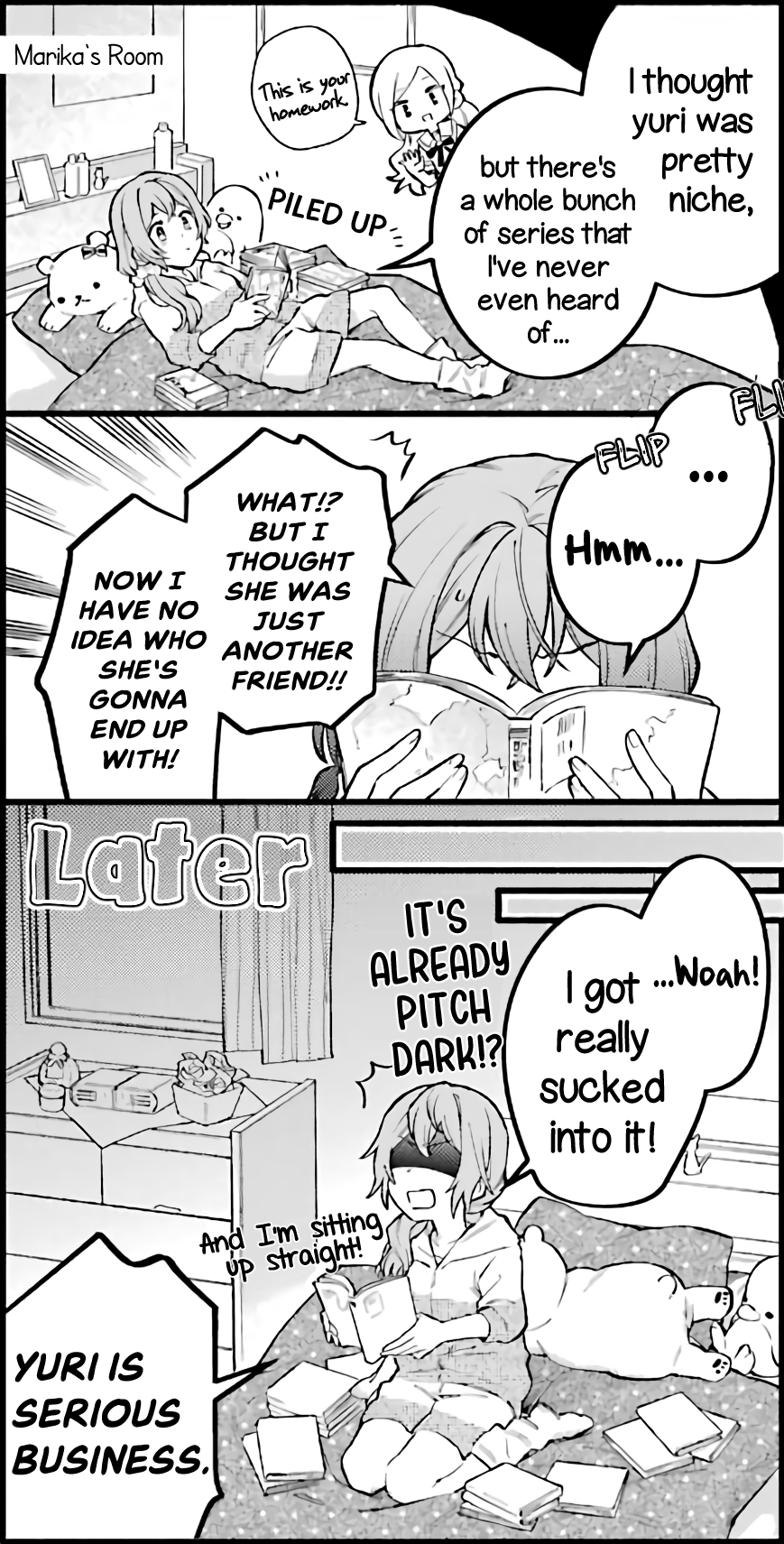
This bit might as well have shot me dead on the spot.
Girls love? Uh, of course they can. Who said otherwise?
I don't recall how I found this. I think I read it last year, but I have no recollection of such. I did read it again about a month or so before the Mangadex DMCA, but I didn't note that down either. Everything about how I came across this manga is like a dream that might not even be mine. What is happening. Help.
There are many elements at work that can be fairly divisive. The premise alone, which is basically compensated dating between high-schoolers to judge whether one of them believes romance between women is possible, can be pushy to people. There's a side plot involving who I can charitably describe as "a kid" fucking things up for a lot of people by virtue of her age. The only adult here with a name and actual focus is a pervert. I can't describe it any other way, frankly. Every individual part of this manga would probably be described to me in such a way that I would steer well clear from it, depending on which one of my freak friends was telling me about it.
And I read the whole fuckin' thing in one sitting.
Marika strikes me as a character that seems rather dime-a-dozen in yuri works, the stereotypical MC who proclaims "nah I ain't gay I got hobbies and shit", only to then fall head first into the proverbial hole in the wall whenever questioned by anyone who knows her. Now I understand what "power bottom" means. Generally speaking, I wasn't too convinced (in many respects) with her at first. It seemed almost too contrived that she was against yuri, like her staunch denial was the only thing that didn't make the entire story a one-shot by extending the pacing. On the other hand, I do kind of get it. Kids and teens rarely think deeply about relationship dynamics, especially when it involves someone they dislike, and Marika's distance to Aya certainly wouldn't help break the ice of such a complicated relationship so easily. Hardly gripping, but it works. It's funny that she keeps up the act for a short time, even after she now has a girlfriend. Yuri for those who are messy eaters (or so inclined not to use cutlery.)
Aya is funny. She rarely opens her hand, but she might as well tell you she's in tenpai the whole time with the way she fishes for openings. Much of the teenage melodrama stems from her aloofness complex and expected ability to never openly communicate about things Until The Exact Moment They Are Important, but I admire her gung-ho approach to this self-imposed quandary of "yuri real???" she has established. She can be cool and clumsy in different ways, maybe even too excited to get it on with Marika in all 100 days, that she often comes across as "cute, but too forward thinking." Though the whole idea of "date me instead of some oji-san and I'll show you what true yearning is like" is an insane hook to start a series, it's precisely this kind of ridiculous opener, and Aya's tenacity to see it through, is the difference between a mediocre story and an interesting one. Suffice to say - you're an original, Aya Fuwa.
This is a work that reminds me to judge art by my own terms. Verdict? True.
Okawari Itadaketa Darou ka?
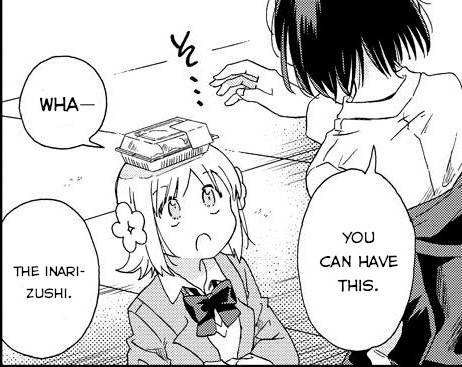
This lunch is what all true warriors strive for.
Friend of the channel scanlated this one. You know how it be, we support the homies through all the times. Good work as always.
An interesting premise to this manga. Dense protagonists like Suzu are easy sells for me, but tying the premise around a dummy loner foodie with a knack for attracting the supernatural? Now you have my attention. U-temo draws Suzu like a fuckin' hamster, and then throws the poor girl on the metaphorical wheel to watch her run. It's so cute. You don't really know what kind of relationship Suzu and Jin have (from the former's POV, at least) but it's pretty clear that there's more to being friends than mutual meal tickets. Jin is also an interesting character - it's hard to tell where the monster starts and where the face ends with how she plays off being the aloof and brooding type, but as the manga progresses, you start to see how conjoined both halves are at the hip, and what that means for Suzu as they find more enticing meals.
For a supernatural manga, many of the shots and panels vary intensity quite a bit. I mentioned Suzu being very rounded, often kawaii rotund at times, but Jin nicely contrasts this with sharper, more pronounced linework that sorta points at you. It matches her more narrow gaze and single-target focus of ghost lunch very nicely, with the added effect of making the ghostly entities that comprise her mealtimes stand out with their thin presence. Dichotomy is important, and U-temo nails the constrast in a neat fashion. I am ignorant to horror, and the nuances of folklore pass through me because I am a BABY who is WEAK to FEAR + all sorts, but this was a good read. Many thanks to the homie for another fine recommendation.
Thank you for the meal.
The Fed-Up Office Lady Wants to Serve the Villainess
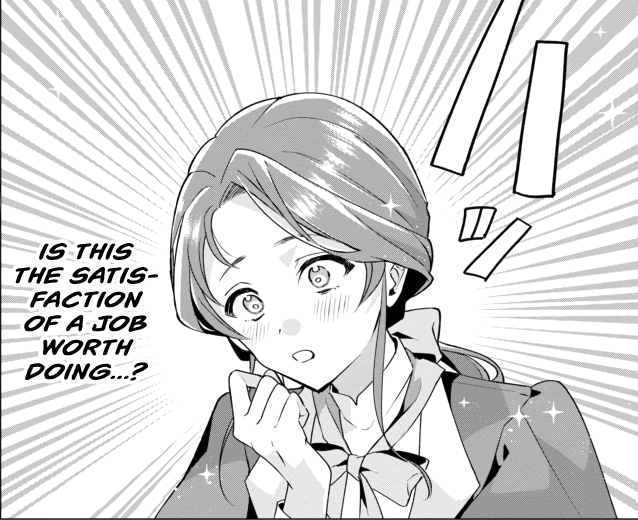
How it feels at your second job before working above your pay grade.
EMPLOYMENT SUCKS
Natori is the textbook definition of a wallflower. She tries so hard not to stand out that it has the complete opposite effect. Being a 25 year old woman in a world staffed by teenagers will have that effect on you. But I digress.
I had a bit of a villainess binge at the start of the year, with this manga being one of the first recommendations that immediately popped out at me. It helps somewhat that friends and mutuals corroborated its quality here, but I am pleasantly impressed with how 'OL Villainess' (foreshortened name pending) has avoided leaning too heavily on the foresight crutch that many isekai villainess stories fall into. Our MC knows the game inside and out, but nothing goes entirely to plan that it feels so contrived when events inevitably deviate because of her involvement. Learning about what the plot "should" be eventually takes a backseat as Natori becomes more personally involved with the stakes and intrigue, which then ties her relationships with Lapis and Diana together as she becomes part of the story in her own way. I think this approach to storytelling in a tired format like so is novel!
Readers might view Natori's initial lack of forwardness as frustrating, certainly not helped by the way she dodges taking part in anything to preserve the sanctity of her oshi(s). I honestly didn't mind it so much, after however many awful isekai migrator stories I read where the main character was too confident about being overworked office worker number 58,927 in their previous world/life. It gives her reason to find new purpose in life, a good motivator to toss the shackles of modern life aside and live in the moment for a bit. Something I almost didn't notice until I write this sentence - she feels... almost Victorian in this world. Lots of similar stories make zero effort to have the main character fit in with their environment, but Natori being solely proficient at administration really helps sell that she's a fish out of water. You get to watch her develop in her own right, rather than further blending into the wider world around her like many later characters insist on her doing (for her own safety, I should stress.)
Lapis is also a fun character to engage with. Unlike the typical "villain with two sides" who drops pretty much everything upon encountering someone from modern day life, she's consciously stuck between who she is in the story and who she wants to be as her own self. The manga does a really good job of highlighting these two contrasts with the differing font choices (again!) and speech bubbles, though it might seem a bit too obvious as to which side is fronting at any particular moment. I like strong figures who can't stop wearing their heart on their sleeves, and it's always amusing seeing her do the push-pull with Natori as she makes heads of what their relationship shapes up to be. One can't quite tell what she's really thinking... and I like that juxtaposed with the clumsy, self-conscious, but open-minded Natori. Employment yuri...
The art of 'OL Villainess' is sublime. I get caught up in how clean everything looks. It feels like no expense is spared when the tone shifts from doki-doki to intense. I'm not sure how to describe it, but it feels like viewing the vague liquid of class S through the looking-glass of modern yuri. There's a flowery overtone to the more fierce shadow that Lapis' scheming hides beneath the covers, but you don't miss either side of it. Nekotarou has a very beautiful art style that matches the kinda faux-modern history aesthetic of the game world, while also crafting some great faces. Some of you would explode if a woman made the kind of glances Lapis does. Awesome.
You have my word that everyone is right on this one. C'est good.
Sister and Giant: A Young Lady Is Reborn in Another World
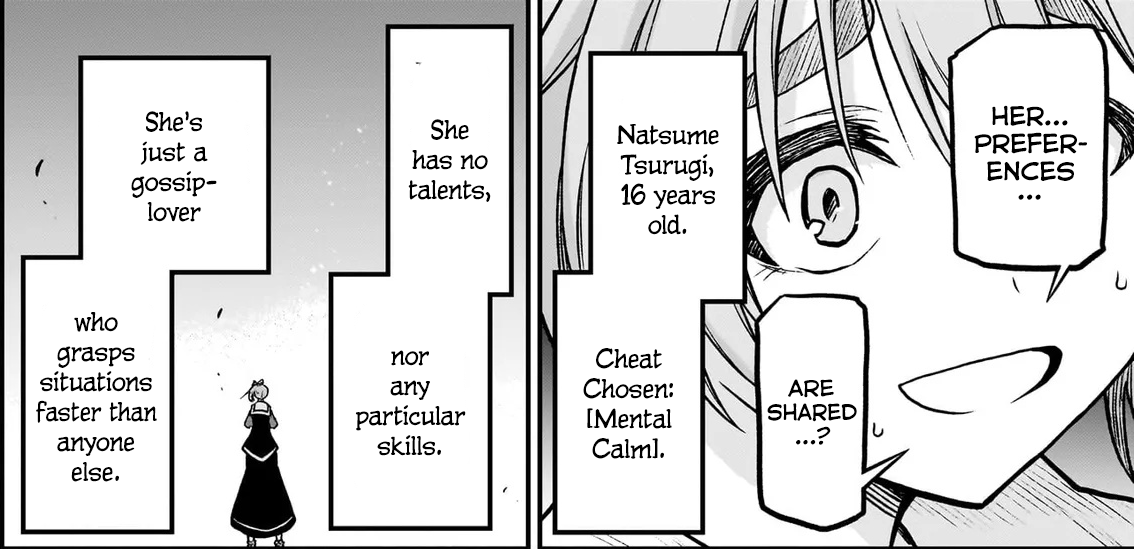
I know many people like this. Fascinating revelation.
Some of you are side-eyeing me the same way an audience would when an actor swordfights in a play and accidently throws the sword out their hand.
I found this one just absentmindedly browsing for an evening read one September evening. Was I expecting anything? Hardly. I expect nothing, so that I can be surprised when a work finds its way into my memory for long enough to write about it. Like now.
It's hard to describe how I feel about this one. Don't get me wrong - it's cool, and I think the ideas on offer are interesting enough to catch my eye. Whether author Be-con is a genius, or genuinely insane, for taking story beats they like and incorporating them as they go along depends entirely on how well you think the end product is executed. To me? I think it works pretty well! Everything moves at a crazy "seat of your pants" pace that does get slightly overwhelming at times, and you do get caught up in the primary motivation for the main character Hinako to kill her "onee-sama" at times that you forget there's like, three other overarching narratives running concurrently. It feels like an action manga wrapped in a booby-trapped toxic yuri claymore. And that's not always a bad thing.
For an action series, there's a lot of pretty good action here. The linework really sells the impacts and feeling of motion when something big happens, but you get this auxiliary sense of not seeing the whole picture with all this detail going on. Hinako is a figure who drinks her own ego, seeped in a self-destructive goal that the audience knows feels like a waste of time - not in the sense that the narrative sucks for it, but because she's ultimately aimless. Elis is comparatively massive in stature, but much smaller in presence - she lets action talk for her, despite being a smarter giant, but ironically lets people walk over her as a result. She has to make herself known by being "the (quite literal) bigger person" in the room, even in spite of her being a morality crutch doubling as a doomsday device. The whole manga reads like shit's being thrown at the wall and praying something sticks, but it's landing some pretty good shots, I can't lie.
Will keep an eye on this one.
Dear Flowers That Bloom In Days of Yore
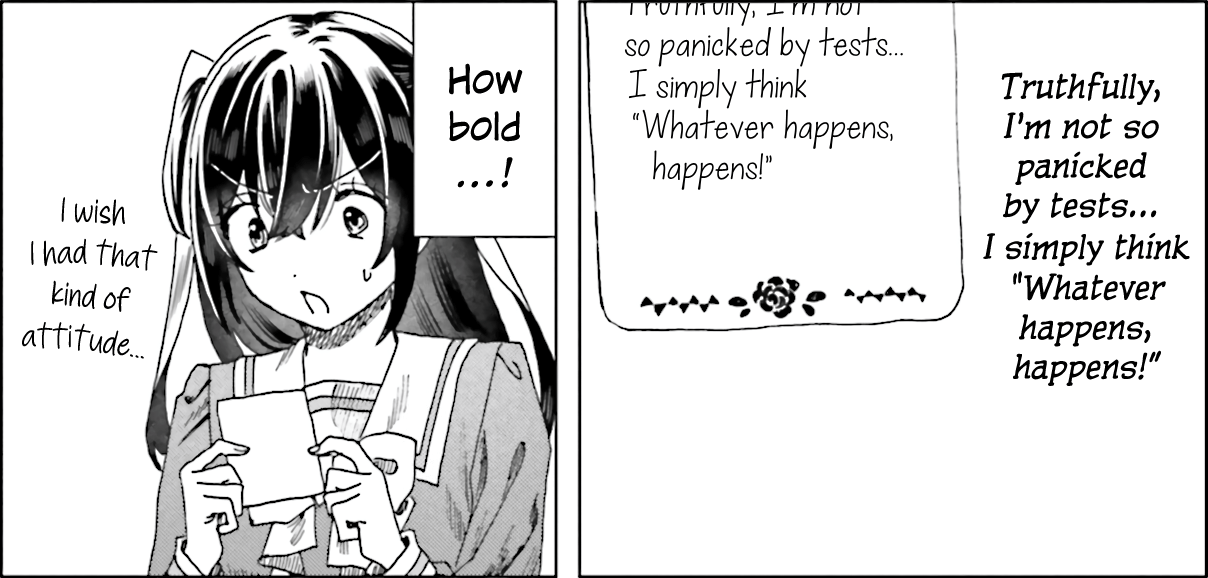
Delightfully devilish mindset to have.
Romance is a wonderful quality to admire.
Another recommendation I found out in the wild. I must stress that my familiarity with class S is admittedly paltry, despite what it may seem. I am a man tainted by the hubris of pursuing knowledge, after all. Such immaturity is what convinced me to leap into this read with full speed. And I am happy to tell you, dear reader, that this was splendid. To imagine that such immaturity would be reflected in the world I see before me, to chase after that view as nothing more than an observer in the windowsill, is a beauty that I am grateful to experience.
Watching Kasumi and Haruyo's childlike approach to their relationship unfold fills me with satisfaction. I tend to use the word "ephemeral" often, usually in reference to something never quite permanent. It's like grasping a breeze with your fist, or selling your childhood toys. You look back on short moments fondly, but we all must understand that things come to pass. They know that things cannot remain, that something must budge between them, as they navigate the lines between "sisters" and romantics. Works like this tend to frustrate readers, perplex them. Perhaps I have witnessed Igarashi Jun's madness without warning, and such irrationality is mirrored unto me as I interpret that which I lack understanding for. Nonetheless, I admire the juxtaposition, the contrast, the inconsistency of it all. Even without comprehending... I understand.
Symbolism is the bread and butter of AriSaku. There are many panels where details are obscured to the reader. You do not see everything in the confines of a shot. Some of the chapter cards hide an element that would otherwise paint a better picture. Everyone has a secret they want to keep. But as a later character alludes to, maybe some secrets want to be found? It's this kind of coquettish enigma that may entice audiences towards class S - a secret that others want to tell the world one day. Some panels give exemplary focus to short burst of words. When Kasumi, or Haruyo, tells the other "I like you" or "I love you," it hangs with that taste of fleeting impatience for an answer. Would it be better for an immediate reply? Or should we, as the audience, think on it, just as these two do?
Another word that comes to mind when I think of describing AriSaku is... contrast. I have used this word a lot, but it feels most appropriate in this context, moreso than any other. Describing the stark difference between Kasumi and Haruyo, with their senpai figures, Sayori and Mizuki, as mere "yearners when real toxic yuri walks in" sits ill with me. The latter pair are destructive, almost catastrophic in how they handle matters. Ye writhing in that skin of yours, wanting to compartmentalise complexity with meaningless conjecture - I intrude from the other end of that bathroom, and wish I could encourage for you to hurl more. Reconciling with teen romance through the black coffee of adulthood is never pretty, but to see these two sides of the same spinning coin back and forth, is a kind of passion that one must acquire a taste for. To understand what makes reality so ugly, so visceral, when portrayed this way - there is beauty to this madness, and I admire such duality in its own way. I very much enjoyed this read.
Beauty exists in all things. Whether ill-fitting, wistful, or incomprehensible.
COMPUTER INTERACTIVE
Shutokou Battle / Tokyo Xtreme Racer (2025) [early access + full release]
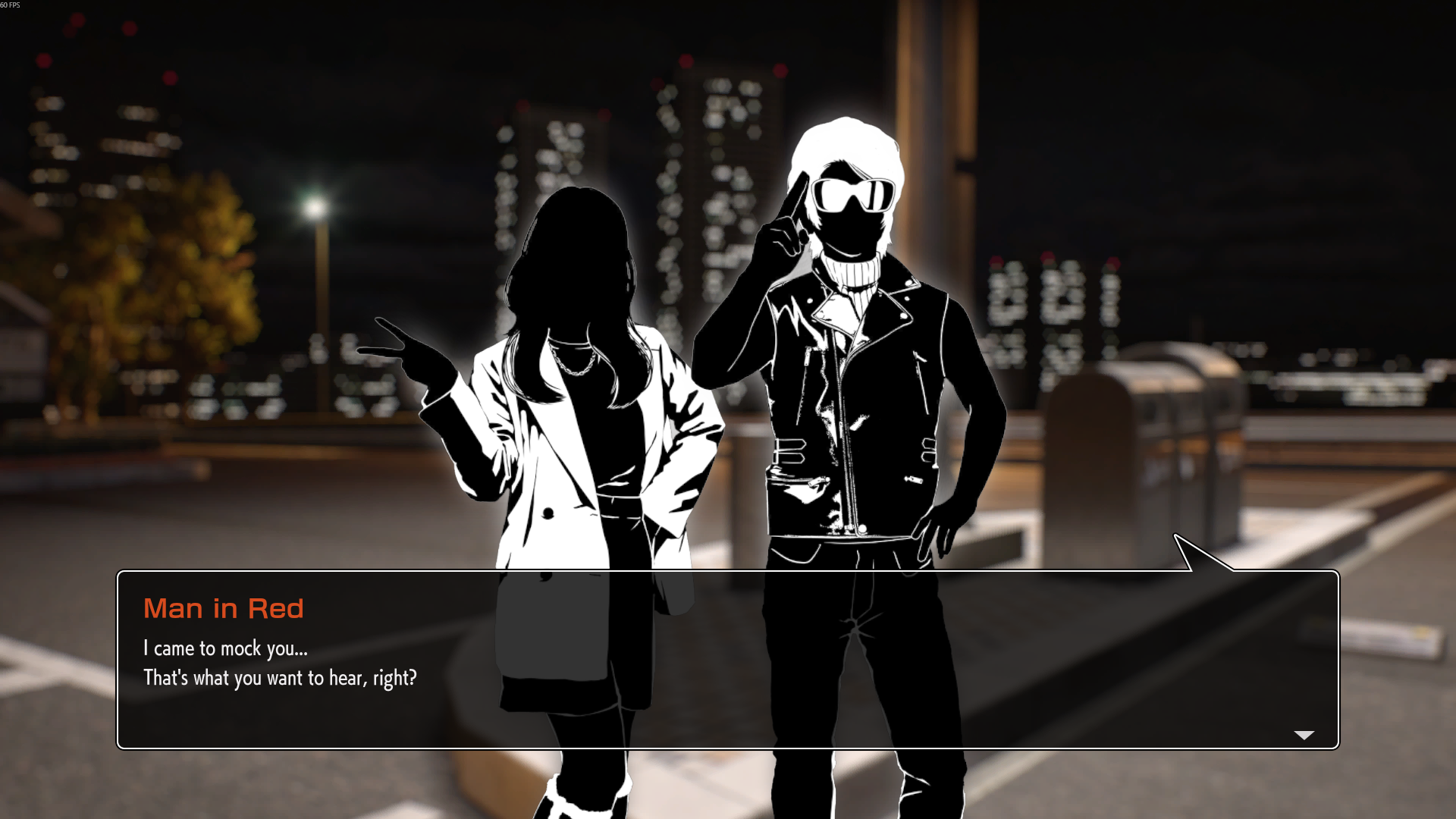
"Don't interfere in a battle between men!" Or so it goes.
Who would have imagined that the worst decade in modern history (by all possible metrics) would have heralded a 'dormant video game IP to critical acclaim' renaissance? Certainly not me.
The 2025 iteration of Tokyo Xtreme Racer (which will become more frustrating to continually reference by name) follows in the footsteps of many niche-yet-popular franchises who last saw breath in failed PS3/360 radicalisations on their unique format, like Ace Combat and Armored Core, by just... refining their good idea(s) for a modern audience. To nobody's surprise, this was a smash hit. Almost TOO much of a smash hit.
SB2025 (as I will henceforth refer to the game) draws upon the vague continuous narrative breadcrumbed throughout many of developer Genki's prior instalments. You once again don the mantle of a nobody turned nightmare, but you are just as quickly drawn into another conflict between street racers and their ambitions, as you once again try to decipher what Buddhist asceticism has to do with street racing. As a prior fan of the Shutokou Battle franchise, there's a lot to appreciate here from a writing perspective. We finally get (vague) loose ends as to the relationship between Purple Meteor and Jintei, some respect for the fans who were kept waiting since Import Tuner Challenge in 2006, and a clear story progression through our own rivalry with new character Eternal Polaris. Much of this new game is a love letter to the correspondances of yonder, and suffice to say, Genki still knows how to evoke a blush.
Driving in this game feels interesting, or at least in comparison to Shutokou Battle 0. Cars in SB2025 grip. They grip with astounding candor. It's laughably hard to purposefully oversteer in this game, as many cars just refuse to loosen the back end at all during tight corners, even if you force them into extreme maneuvers. On the other hand, understeer is almost like a fetish here. Vehicles that I would often have no issues with in previous games, like the FD3S, had to be adjusted constantly, all so I could take a corner with endgame parts at anything higher than... second gear? It is so strange to me, but I suppose that is just the curse of being able to optimise Unreal Engine 5 where other developers somehow cannot.
(Side note: this game runs VERY well on decent hardware. I'm shocked that I could play with high/ultra settings on virtually every graphics aspect except global illumination. If you have a half-decent, but not top-end PC, I think this'll run fine for you.)
That being said... [I have a number of issues with the overall balancing of the game, namely with the lack of viable endgame cars. It really feels like they overbalanced around the engine swap perk specifically, because not being able to use half of the cars that were good in prior games feels like a slap in the face.] When I beat the game in mid-November, there were exactly two cars that one could use to finish the endgame without engine swaps - the Lexus LFA, and Nissan GT-R R35. Compared to the array of cars that you could beat Shutokou Battle 0 with, provided you went 3000km to unlock the final engine/body/muffler upgrades, this feels middling. Hell, former endgame cars like the FD, GT-R series, and even newer cars that look like they should be good, like the new NSX, just don't cut it at their normal top-end anymore. The rest of the game is great, which makes this one complaint re: balancing such a disappointment for me, as someone who likes to experiment with endgame variety.
That being said, [I’ve never had this much fun with a game in a while, and Genki definitely remembers the best parts of previous Shutokou Battle games enough to properly refine them, rather than overhauling them for newcomer sensibilities.]
Video games are so fucking back.
Mahjong Soul
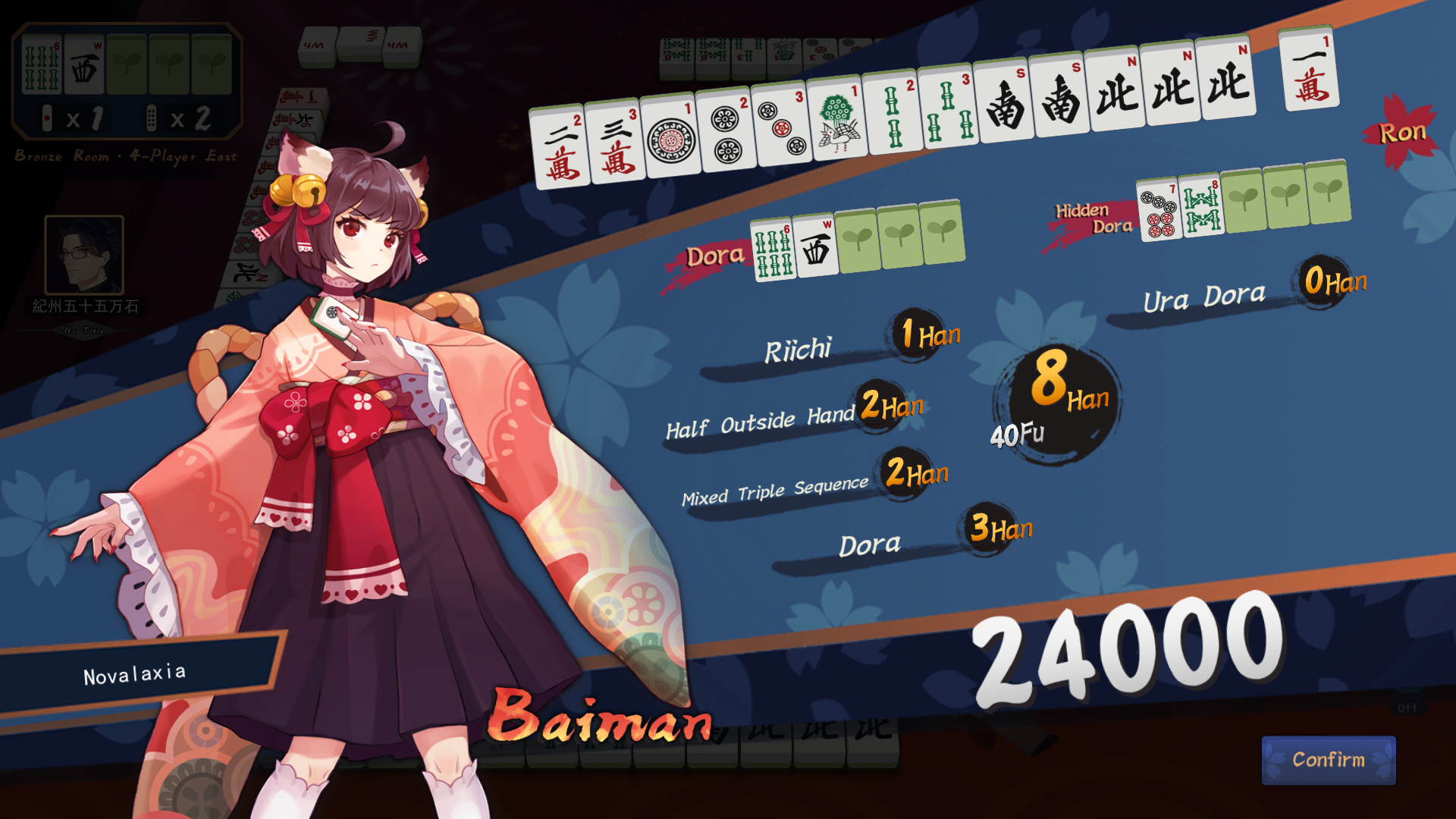
BILLIONS MUST RON
dude. I love games
A friend of the channel jokingly(?) asked if I was ever interested in playing mahjong. Wanting to broaden my horizons again this year, I agreed. This may arguably be one of the great mistakes that some of us commit to in our lifetimes.
I jest. Riichi mahjong is honestly fun as fuck. Sure, it doesn't have quite the same kind of complexity or depth that I like in TCGs, especially with how it feels like some players in bronze rooms do just win hands by sheer chance. RNG notwithstanding, the game is cool! I like that there's a ton of different simulators, and it certainly helps that the onboarding process for riichi mahjong in Mahjong Soul isn't completely terrible, so I was able to pick up middling game sense fairly quickly (while also being coached/grilled by friends on stream.)
Working on videos conversely means I have less time to play games. I think I typically just boot up a (gacha) game, play for an hour, and then just listen to an album while I read manga until I have to sleep. Nonetheless, Mahjong Soul was a fun part of my time for a little while. I won't say it caused great damage to my human spirit without a single benefit, because... well, gacha games and TCGs did that to me already, but I don't think I've ever been this heated in a long time than dealing into someone's dogshit hand with a red dragon tile that should NOT have been the wait. Good game.
Umamusume: Pretty Derby

Hell. I am in hell.
Even I am not immune to propaganda.
Unable to restrain my curiosity, I started playing the JP version of Umamusume about 3 weeks before the global launch. It was initially meant to be a head start on core mechanics, a way to familiarise myself with some of the gameplay quirks so that I don't have to rely on the inevitable rush of horrible "starter guide" bait videos that would... inevitably... be made... fuck, I jinxed it, didn't I.
The core gameplay loop of Umamusume is fairly rudimentary. You train your girl of choice for 3 years, have her participate in races, whether they be goals or choices, and try to ensure RNG skews enough in your favour to ensure you get all the gold skills from your support card deck, alongside any inheritances attached to your character's "parents" (i.e. past runs with values assigned to random qualities.) Maybe I'm predisposed to games with infinite random chance, but it fills the void of Master Duel enough for me to not complain that much. It also helps that JP is quite generous on average, but that might be me drinking the Kool-Aid. Works on my computer.
If I were to compare the story to other gacha games I picked up and subsequently dropped over the last year, like Blue Archive and Heaven Burns Red, I would probably say this game's quality is lodged somewhere between those two. As a man driven by character interaction, Umamusume certainly knows where to hit, though I will confess that my attention often ends up drawn towards the real life horse history that I overlook my appreciation for the wider writing. An underdog story is always welcome in an ensemble cast, but when you have the cream of the crop often being underdogs in someone else's story, I feel that the impact is dulled quite a lot. There's discussion on how even horses (turned musume) that win just one solitary G1, or a handful of G2 races, are far beyond the rank & file here, but it becomes difficult for me to enjoy the story of one like Verxina when the game itself ties significant worth to Gentildonna-like figures with comparatively exceptional accomplishments. In some sense, I actually find it harder to appreciate Umamusume's character writing to some degree, having to mentally disassociate foregone knowledge of the real horse from their portrayal in better circumstances here.
Don't let my detractions ruin the fun, though. I think the game isn't too bad. For all intents and purposes, it is the ideal idle game for me, someone who loves big number go up. I have yet to sit down with much of the main story beats in the mobile game, or the anime, to a significant degree just yet, but main story 2 was very good. I must, however, confess that I grow weary of mobile games. Questionable as it may seem, considering I spent money on this game (blame the RAM and SSD shortage.) It may be my age talking, but I find myself wanting to use my time better as I grow older, and part of me yearns for Hideo "70% of my body is made of films" Kojima's idealism to engage with more art in a personally meaningful fashion. Will 2026 be the year I unshackle myself from the gambling machine? Who knows. Until then, I will be content taking risks on 2% failures that invariably fuck up an entire run.
We love King Halo.
ESSAYS WITH MOTION. AGAIN
weird & comfy japanese horror movies :-) [@maria_ilmutus]
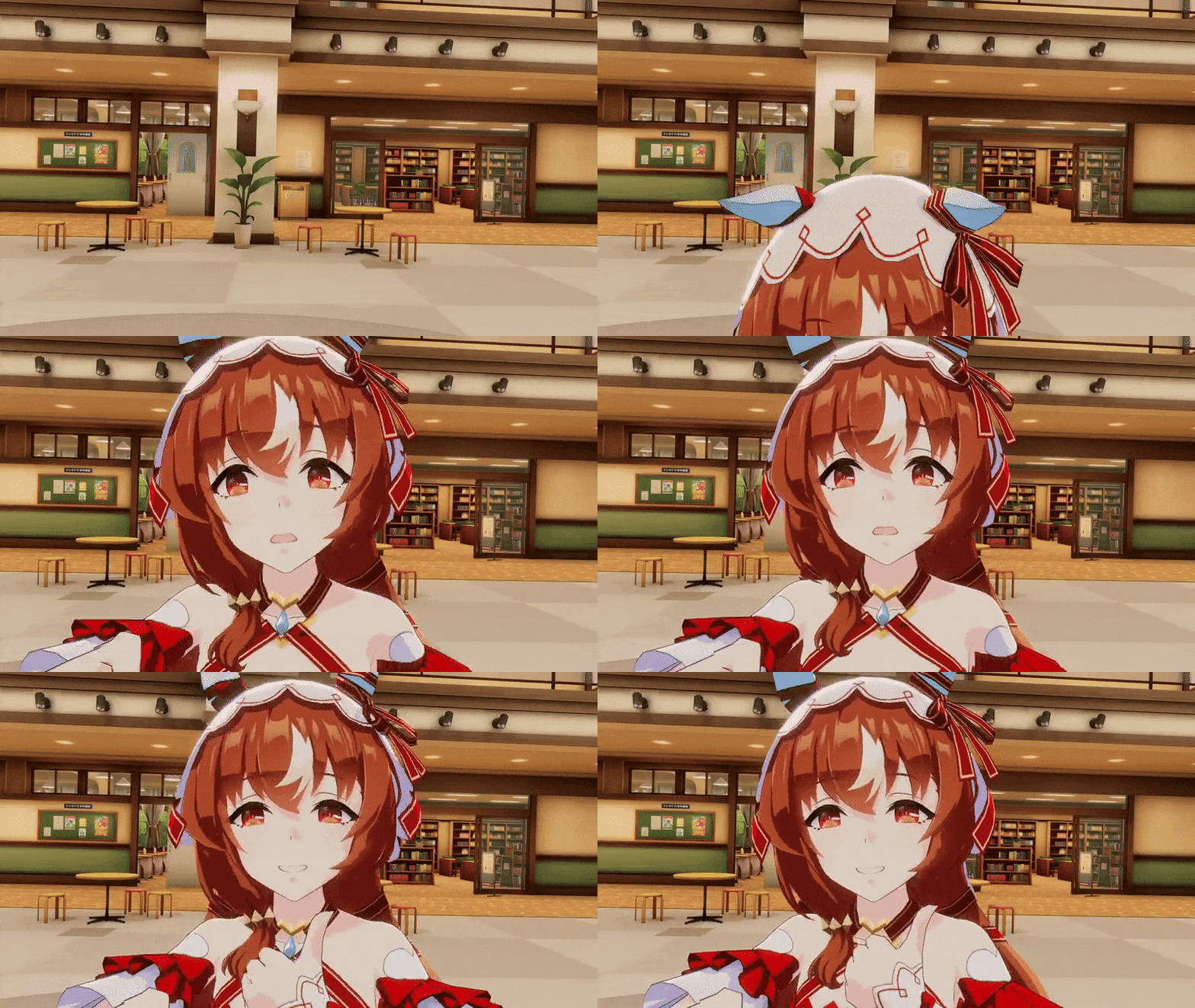
[a fine selection of horror movies from Japan’s bubble era, tied together with a neat overview of directorial connections during this transitional period of Japanese horror. I am the exact target audience for “auteur selection of niche target filmography” pieces, so this video left me thoroughly impressed with the offerings. maria is in that category of people who has a clear eye for detail, so I trust in the process. this video fucks hella (positive)]
Horror is a category of film that often eludes me. I often lack the stomach for anything less ephemeral than the psychological, so much of my exposure to the wider field in that regard is through the lens of others. (Jumpscares make me scared.)
Maria does a good job of highlighting the contextual surroundings behind the 90s timeframe of Japanese auteur horror, while also neatly curating a fine selection of the more esoteric picks that might not immediately spring to mind, for those with a cursory awareness on the topic. I have the Shadow over Innsmouth adaptation bookmarked for a future viewing thanks to this video, so you probably might be spoiled on what shows up in the 2026 post.
This video ties together a lot of assorted notes and pieces on live-action productions during this pre-millennium period, though it is ultimately a piece showing off some cool-ass movies made by people for the love of the game. Awesome stuff.
there's no such thing as a bad game [@Alien_Bob]

[a good message for people who think they’re too good to play kusoge. Bob describes this as a “manifesto,” but I would instead describe this as sending a message. I think the people who need to see this video are probably never going to watch it, while anyone who already is knows this already. WE AGREE]
Not much else worth adding to my prior thoughts on this one. I think it's pretty self-explanatory. For the most part.
I will push back somewhat on the overarching premise that "bad art" is not a thing. Modern review culture is often deferred to as an expert authority on art as a whole, where the words of very few people (often with limited time) dominate the social consciousness of whatever gets reviewed until the end of time. I ultimately believe that "bad games" do exist if one has a standard for proper quality, but I will also posit that the average person lacks the finesse to refine their palette for why something is terrible beyond mere conjecture. To that effect, perhaps "good" and "bad" are figments of the imagination.
A good video that offers strong food for thought. Mayhaps it will sway some of you averse to kusoge.
Don't Call Them Magical Girls 🤫 [@CaribouCoon]

[Showed up in my recommendations and I thought I’d give it a watch. There’s an interesting premise at play with this video here that I wonder is worth internalising re: magical girls as a premise. As my J-core and dariacore/hyperflip videos probably allude to, having genres and terminology often serves as shorthand for audiences to better find similar works, rather than a description for artists to categorise their ideas. There’s absolutely a sense of “following the trends” at play with magical girl works at play here that I think influences the malaise in this video (that I kind of agree with) but it’s worth taking a watch yourself all the same for a nuanced perspective on this piece.]
I think my thoughts on genre bear repeating thrice not. This video touches upon a thought I've had for a number of years, but have only recently found the language to elaborate upon - why does everyone treat 'mahou shoujou' (and other less palatable fields like mecha) as 'genres' for some reason? You may think nothing of it, but I've found it strange that people refer to categories as they're a monoculture whose sanctity needs to be maintained. We're straying into pretty dangerous rhetoric, so I will stop this thought here.
A fair number of points addressed in this video do seem hastily constructed. I question the overarching idea that modern works, the Madoka Magica et al. of the post-Tohoku period, have been significant contributors to what's described as a metamorphosis towards the late-night adult male otaku crowd. However, there is a hint of self-awareness relating to genre and conventions that allows for consideration on the author's wider argument. Discussing these points with a friend addressed the caveat that analysing many, if not all magical girl works through the framework of 'genre' leads to what I described as "some pretty wild preconceptions", based on what you experienced, and your subsequent impressions on them.
Too deep? Who knows. I would like to make a video addressing/challenging this point someday, hopefully from the perspective of someone who has educated themselves on the history of magical girl works beyond the established and esoteric. I agree with the necessity to understand the historical context behind mahou shoujou, but I am not so inclined to extreme that I define those who do not as 'tourists' or heretics. Such faux-importance is beneath me, and you too.
Let's learn to love things a little more thoughtfully. Thank you for the meal.
When Otaku Create One of the Craziest Music Genres [@lazulis1567]
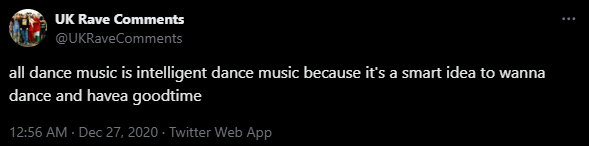
[On the topic of J-core... this is a very strong watch. For anyone interested in another facet of the Japanese underground music scene from a more otaku-focused perspective, I would recommend this highly. Though I admittedly have a very shallow interest in denpa music in terms of its sound, I can’t deny how much influence it had on the wider culture. It’s time to sit the fuck down for some history. I would have appreciated a bit more coverage on the doujin scene, buuuuuuuut that’s very selective nitpicking lol. Good shit.]
Very little for me to add here. You likely owe it to the people behind this insane field of music for part of post-2000 anime culture as we know it today. Strap the fuck in, young buck.
Skylar has made some interesting videos on fields of otaku culture that don't have the weird "AIN'T THIS QUIRKY??????" undertones to them, and for that, I appreciate the work so much more. Far too many videos on less-discussed elements of the wider scene, especially during the turn of the millennium, opt for a bizarre ironic recount that diminishes the massive overlap that doujin and niche otaku culture had on broader anime & manga. My sole gripe is that I would appreciate source lists, but you can't win them all, huh?
Good shit.
Roger Ebert's Relationship to Anime [@pyramidinu9449]

[If you know me, you understand that I am a defender of refined critique. For those who know little about Roger Ebert, or his relationship with anime during his life, this video is an enlightening look at the necessity for objectivity. Like his viewpoint on some of the works he covers, this essay is an open-minded insight as to how the figure many perceive as “the archetypal film critic” would approach the medium. Though Ebert’s outlook on anime, and possibly film as a whole, is outmoded by any modern understanding of art as a whole due to his liberal perspectives, his willingness to engage with the topics on offer in (relative) isolation for what it offers is a stark contrast to the current need for comparison and contrast you read from critics today. PyramidInu makes some good shit.]
Ah, Roger Ebert. I utter his name frequently, and you all roll your eyes at me without fail. He may be a divisive figure to many, yours truly included, but he was, unfortunately, a critic that did actively engage with the discipline of art. A willingness to engage with films that others may perceive as foreign, or childish, is earnesty seldom expressed by what we now call 'grifters' in the modern age. Neither... here or there, of course. Apropos of nothing.
PyramidInu is a creator I am vaguely aware of through osmosis, but this is the first work of theirs I have found time to sit down with, in no small part because of the subject matter. Friends of the channel and figures several degrees of separation have recounted their quality highly - a view I am glad to repeat now, as a viewer of this analysis on a figure worthy of further discussion. People care much about the words of critics - I am remiss to share interest. However, we should be attentive to their reasoning, so as to better assess why such critique is necessary, as this video rightfully highlights.
Excellent perspective. I recommend this video, if only for my own self-indulgence on Metropolis (which is a remarkable film that my childhood reminds me to rewatch.)
damn bro you talk too much, are we done yet
Once again, I forget much of what I experienced throughout 2025. It may seem the opposite, based on how much I was able to write for this post. Work has taken some of my free time, my ambitions much more, and I lack drive for pursuits not my own. That lingering aftertaste of an inability to remember the year's events from the last "media thread" lurks over me yet still, a reminder that I should be less demanding on myself. But I want to keep pushing forward all the same.
2025 is a year of uncertainty for us all. The economy is going to the dogs, world leaders are hellbent on ensuring we go down first, and artificial intellgence is corrupting all that some call dear. However, I remain steadfast in my convictions with art. There is still much for us to encounter, to witness, to share. I see some of you lose hope, entranced by insanity, beckoning to its call. Let me grab your arm and tell you not to listen. Don't give up. Don't look away. As you can find value in art - I find value in connections through people like you.
Keep going. Push through. Show me your conviction. I want to see it all.